


When most people picture a “small country,” they think of Luxembourg or Singapore. But the true bottom of the population list looks nothing like that — it’s a mix of Pacific atolls you could walk across in an afternoon, European enclaves ruled by the same family for 700 years, and one sovereign state where the entire population is smaller than a large high school.
This list uses United Nations World Population Prospects 2024 revision mid-year estimates for 2025, cross-checked against national administrative data where available (notably Vatican City, which reports through the Holy See rather than the UN). Numbers for very small states can shift year to year based on emigration, diplomatic staffing changes, or census timing, so treat these as close estimates rather than fixed counts.
The Ranking, Smallest to Largest
| Rank | Country | Population (2025 est.) | Region |
|---|---|---|---|
| 1 | Vatican City | ~764 | Europe |
| 2 | Tuvalu | ~9,500 | Oceania |
| 3 | Nauru | ~12,000 | Oceania |
| 4 | Palau | ~18,000 | Oceania |
| 5 | San Marino | ~33,600 | Europe |
| 6 | Monaco | ~38,300 | Europe |
| 7 | Liechtenstein | ~40,100 | Europe |
| 8 | Marshall Islands | ~42,000 | Oceania |
| 9 | Saint Kitts and Nevis | ~47,800 | Caribbean |
| 10 | Dominica | ~66,200 | Caribbean |
1. Vatican City — Population: Roughly 764
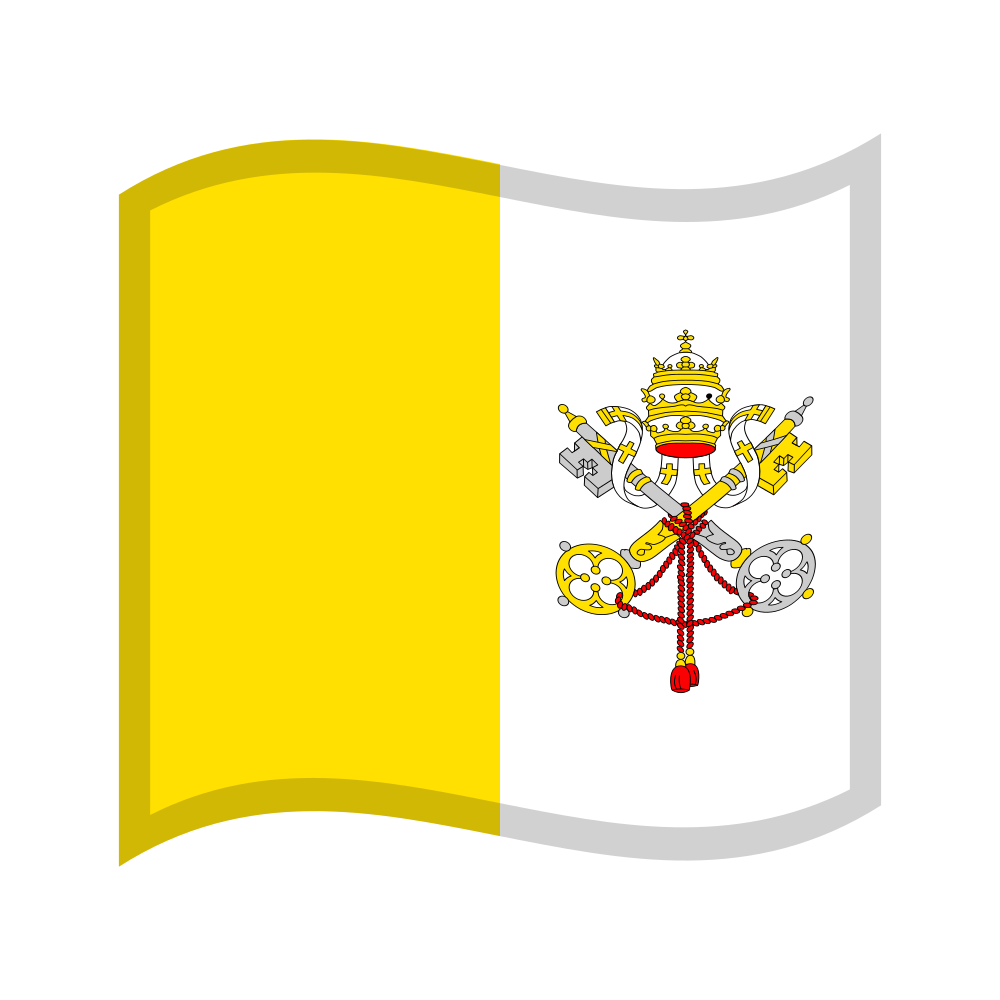
Vatican City isn’t just the smallest country by population — it’s the smallest by land area too, at under half a square kilometer. It sits inside Rome, and technically it’s a UN Permanent Observer rather than a full member state, but every serious ranking includes it because no other sovereign territory comes close to this small.
What makes the population figure unusual is how citizenship works there. You don’t become a Vatican citizen by being born in the Vatican — citizenship is tied to your job. Cardinals, Swiss Guards, and members of the Roman Curia hold it only for as long as they serve in that role. Once someone retires or moves on, citizenship typically ends with the position. That’s a fundamentally different system from almost anywhere else on earth, and it’s a big part of why the number stays so low and so stable.
2. Tuvalu — Population: Roughly 9,500
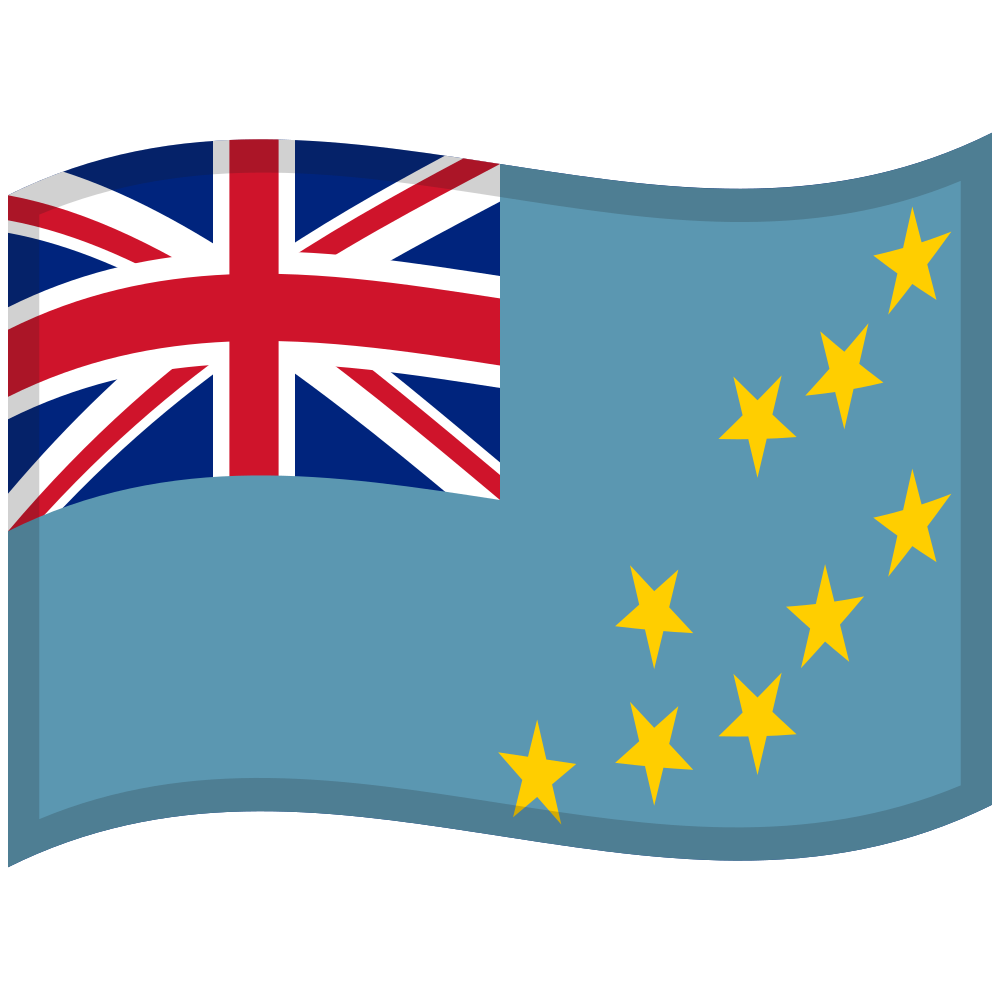
Tuvalu is a string of nine coral atolls in the Pacific, roughly halfway between Hawaii and Australia, with a combined land area of just 26 square kilometers. Its highest point sits under five meters above sea level, which makes it one of the most climate-exposed nations on the planet — a fact that’s directly shaping its population numbers.
Tuvalu has been losing people for over a decade, mostly through emigration to New Zealand under longstanding resettlement arrangements, and more recently through the Falepili Union — a 2023 treaty with Australia that offers a formal, permanent migration pathway tied explicitly to climate displacement. It’s one of the only migration agreements in the world designed around the reality that a country’s land might not remain livable long-term.
3. Nauru — Population: Roughly 12,000
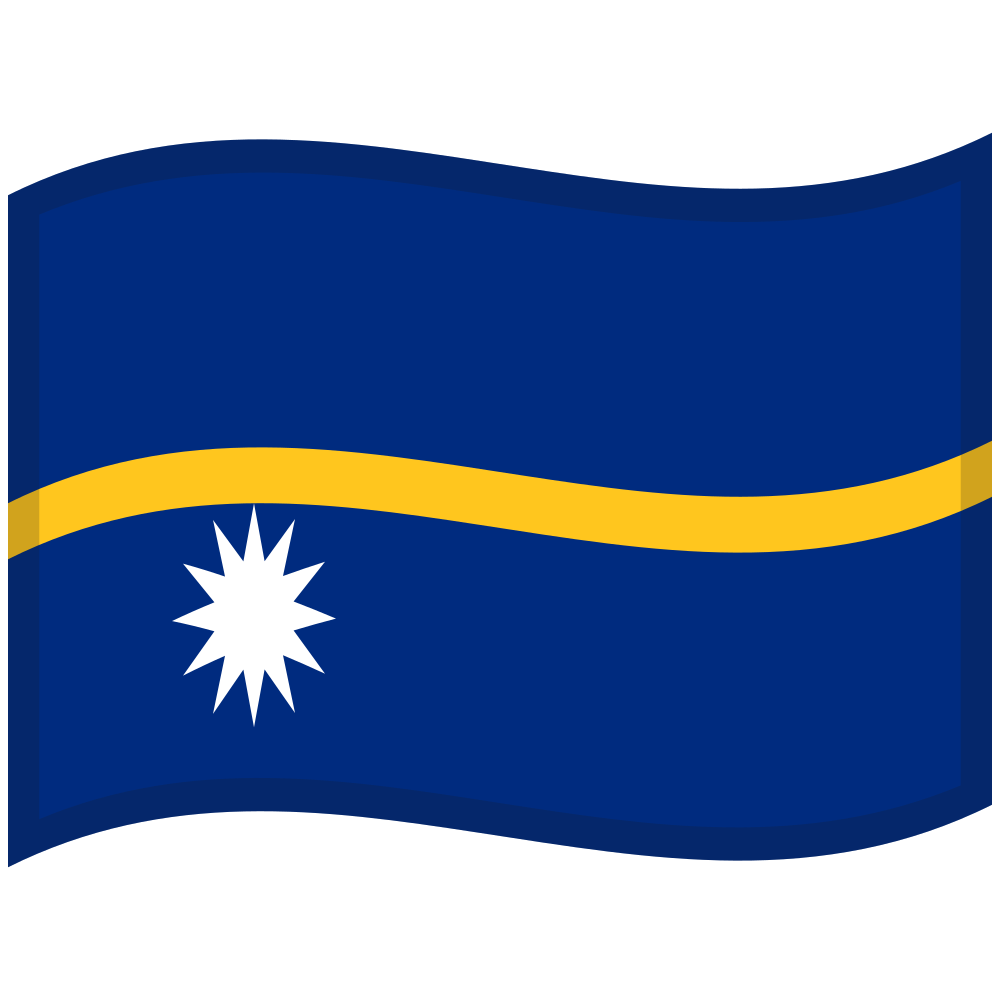
Nauru is a single coral island of about 21 square kilometers — the smallest island nation on earth by area, and unusual in that it has no official capital city; government functions are simply spread across the Yaren district.
Nauru’s economic history is a cautionary tale in itself. Decades of phosphate mining, fueled by rich seabird guano deposits, gave it one of the highest per-capita incomes in the world during the 1970s and 80s. But the mining also stripped roughly 80% of the island’s interior into unusable wasteland. With the phosphate largely gone, Nauru’s economy now leans heavily on fees tied to hosting an Australian-funded asylum processing facility — a very different kind of income stream than the one that built the island’s brief boom decades ago.
4. Palau — Population: Roughly 18,000
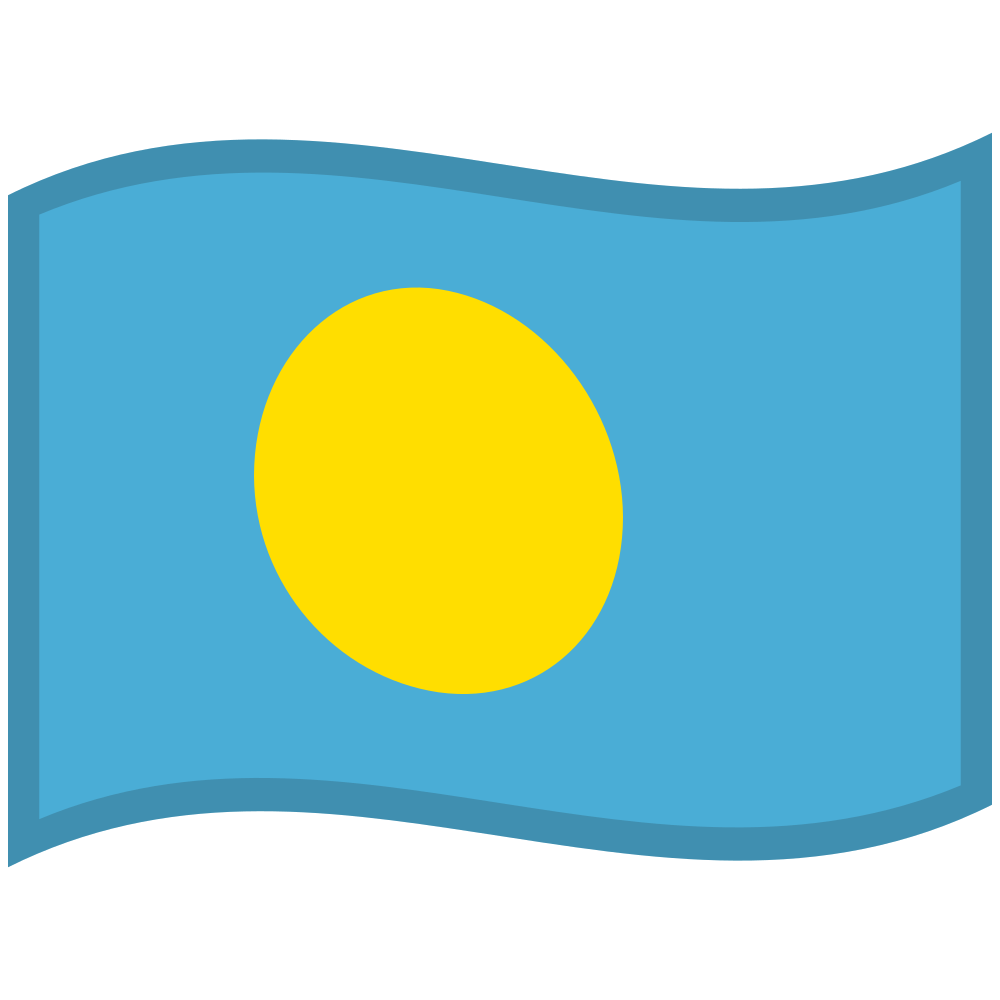
Palau is a Micronesian republic made up of around 340 islands, with most residents concentrated on Koror and Babeldaob. Its history runs through Spanish, German, Japanese, and American administration before full independence in 1994, and the island of Peleliu was the site of one of the bloodiest battles of the Pacific campaign in World War II.
Today Palau’s economy runs on tourism — it was the first country in the world to declare its waters a shark sanctuary — and on continued financial support from the United States through a Compact of Free Association. That same compact, ironically, is also part of why the population keeps shrinking: it gives Palauans an easy legal path to live and work in the US, and many do.
5. San Marino — Population: Roughly 33,600
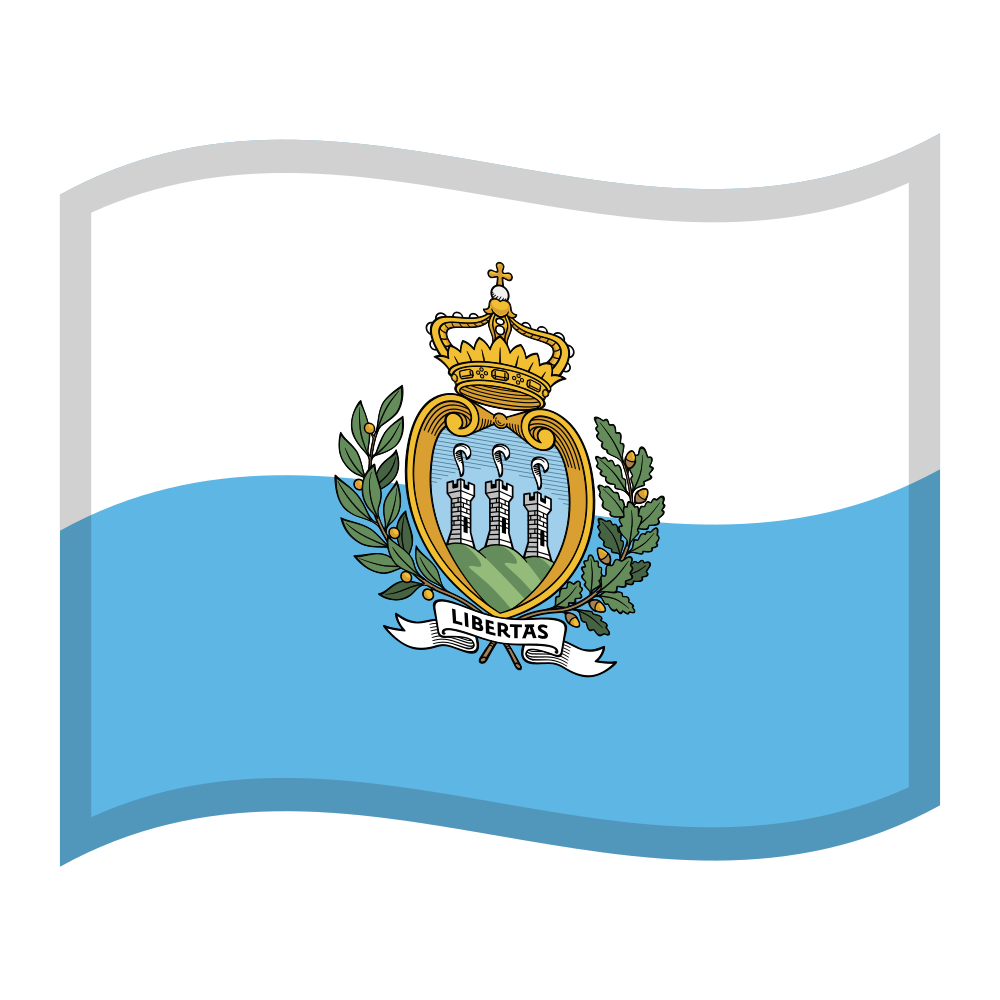
San Marino claims to be the world’s oldest continuously existing sovereign state, tracing its founding to the year 301 CE. It’s entirely surrounded by Italy, perched in the Apennine Mountains around Mount Titano, and its three medieval fortress towers appear on its flag.
Unlike the Pacific nations on this list, San Marino’s population isn’t shrinking — it’s one of the more stable entries here, supported by a banking and tourism economy that gives it one of the highest GDP-per-capita figures in Europe.
6. Monaco — Population: Roughly 38,300
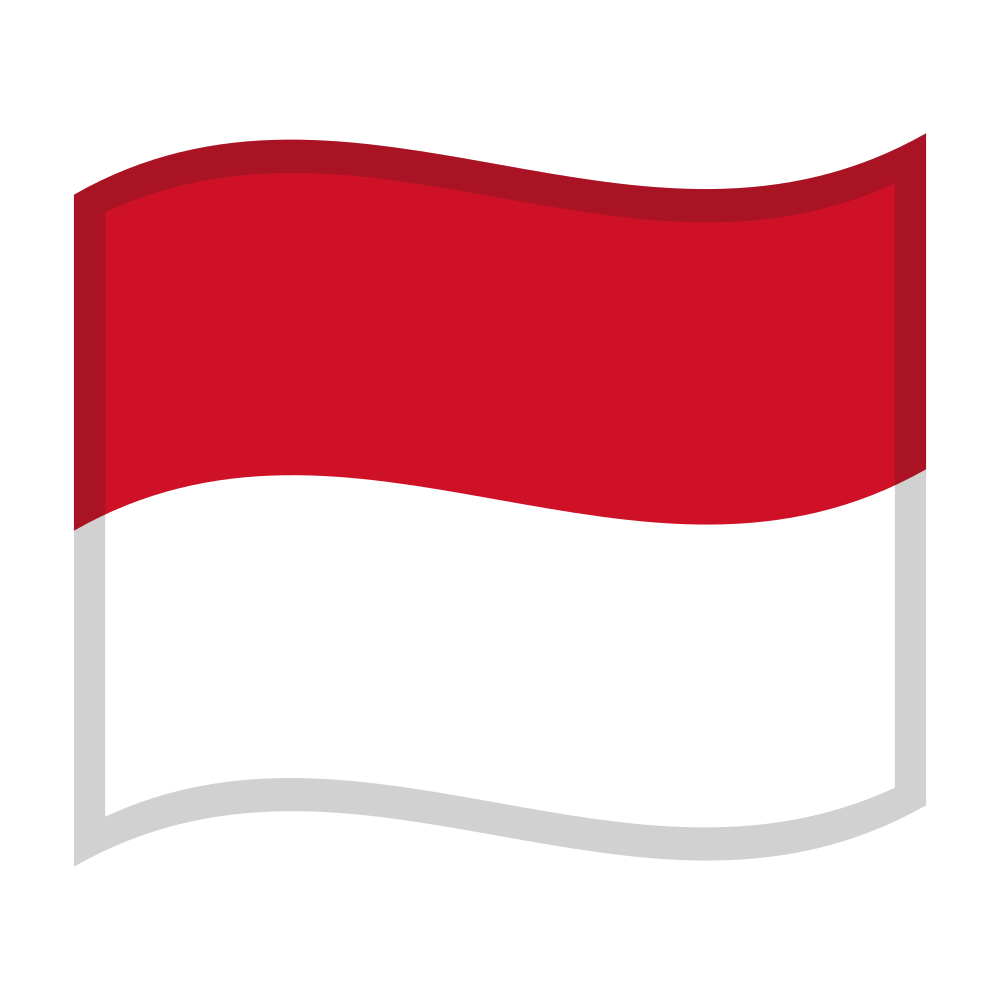
Monaco packs its population into just over two square kilometers, making it the most densely populated sovereign country on earth — something like 18,000 people per square kilometer. It’s been ruled by the House of Grimaldi since 1297, and its zero personal income tax policy, unchanged since 1869, has made it a magnet for wealthy residents ever since.
Interestingly, Monaco’s ranking recently slipped below Liechtenstein’s for the first time in years, a small but notable shift in a list that usually stays fairly static.
7. Liechtenstein — Population: Roughly 40,100
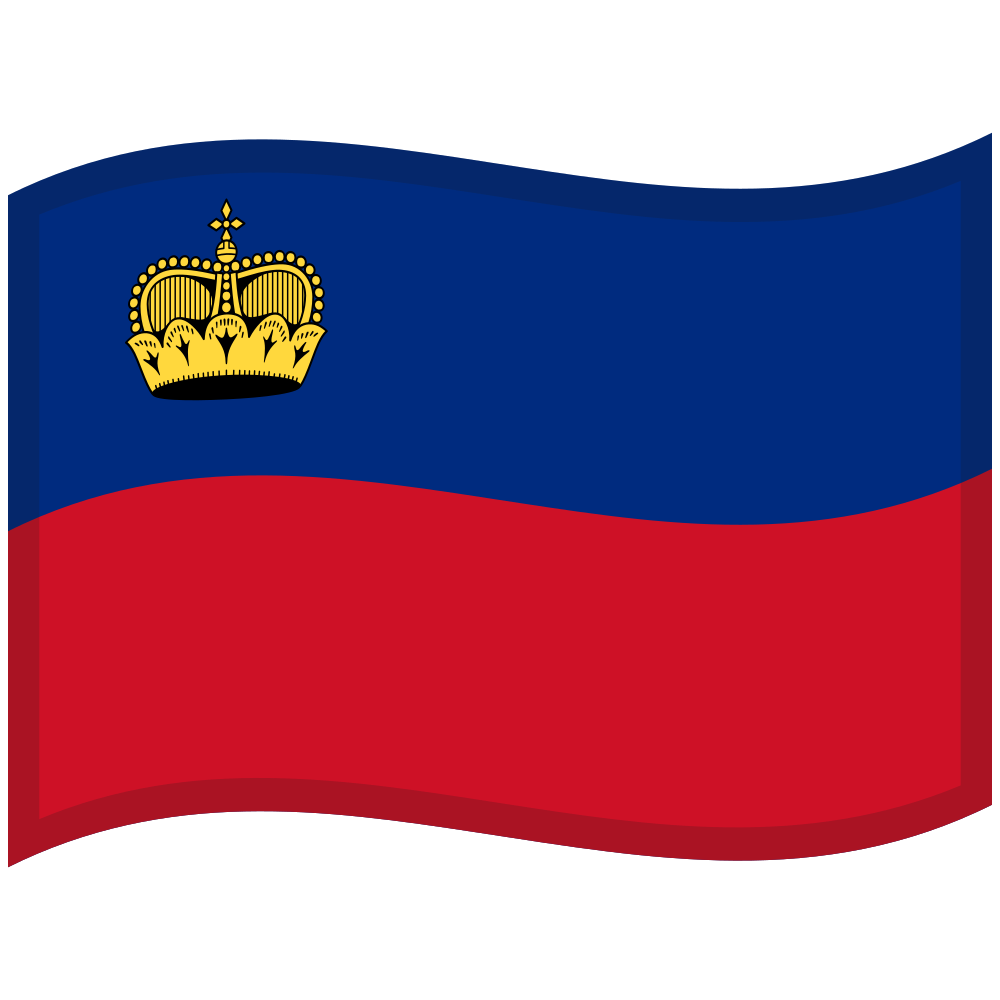
Liechtenstein is a landlocked Alpine principality wedged between Switzerland and Austria, and it holds a genuinely unusual geographic distinction: it’s one of only two “doubly landlocked” countries on earth, meaning every country that borders it is itself landlocked. (The other is Uzbekistan.)
It’s been ruled by the House of Liechtenstein since 1719, uses the Swiss franc, and disbanded its army back in 1868 to save money — it hasn’t had one since. Somewhat randomly, it’s also the world’s largest exporter of false teeth, thanks to a major dental-prosthetics manufacturer headquartered there.
8. Marshall Islands — Population: Roughly 42,000

The Marshall Islands is spread across roughly 2 million square kilometers of the central Pacific but consists of only 1,225 small islands and islets. Its population has fallen by around a fifth over the past decade, largely due to residents moving to the US under the same kind of Compact of Free Association arrangement that affects Palau.
The country carries a heavy historical weight: the US conducted 67 nuclear tests on its atolls between 1946 and 1958, including the largest American nuclear detonation ever carried out. Bikini Atoll, one of the test sites, remains uninhabitable today and is recognized as a UNESCO World Heritage Site specifically because of that history.
9. Saint Kitts and Nevis — Population: Roughly 47,800
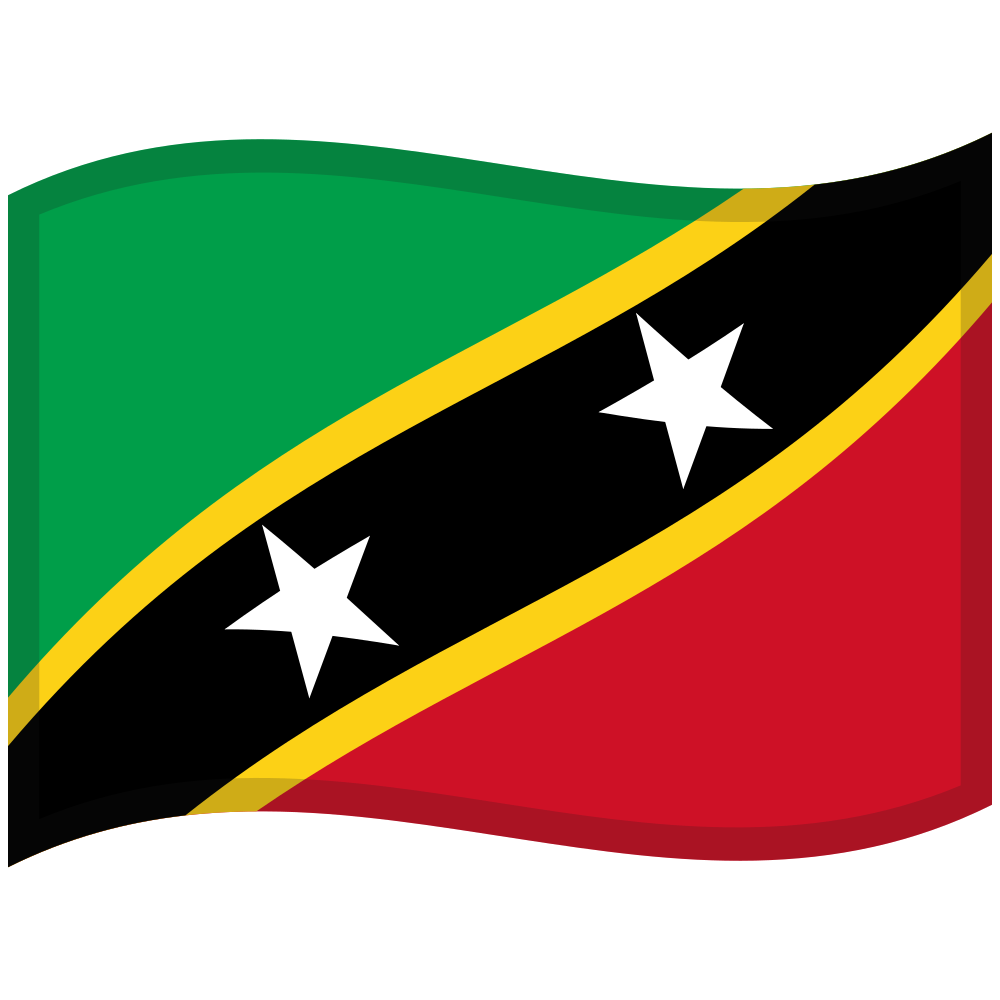
This is the smallest sovereign country in the Western Hemisphere, by both land area and population. It consists of two islands separated by a narrow channel and holds the distinction of being the first English colony ever established in the Caribbean, in 1623.
Sugar dominated its economy for centuries before production finally ended in 2005. Since then, tourism and offshore financial services have taken over as the main sources of national income.
10. Dominica — Population: Roughly 66,200
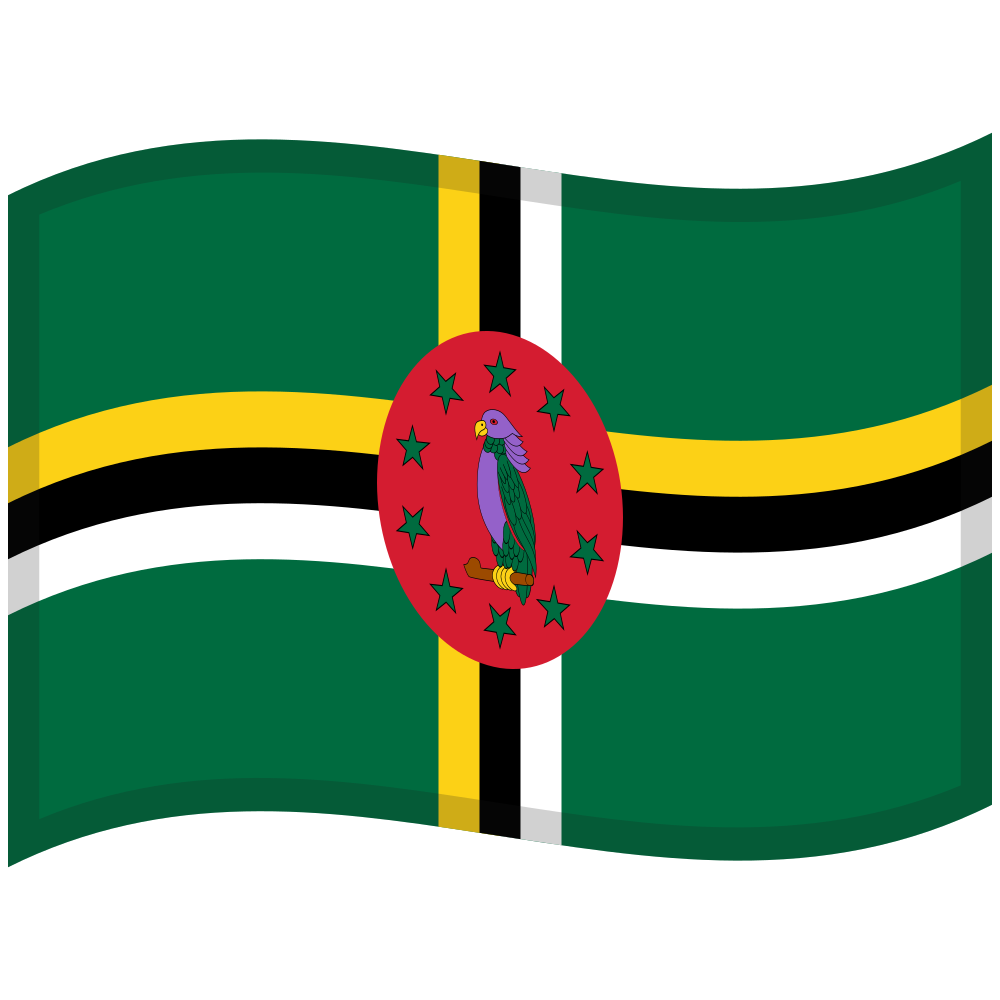
Dominica is a volcanic island in the Lesser Antilles with nine active volcanoes — the highest concentration of any country on earth — and it’s home to Boiling Lake, the world’s second-largest hot spring.
It’s also the only Eastern Caribbean nation with a substantial surviving indigenous population: roughly 3,000 Kalinago people live in a self-governing territory that’s existed since 1903. Hurricane Maria devastated the island in 2017, destroying an estimated 90% of its buildings, and Dominica has since set an ambitious goal of becoming the world’s first fully climate-resilient nation.
Why These Countries Stay So Small
Three forces show up again and again across this list. Physical size limits the ceiling in places like Vatican City, Monaco, and Nauru, where there’s simply very little land to live on. Geographic isolation caps growth in the Pacific microstates — Tuvalu, Palau, and the Marshall Islands — where remoteness historically limited settlement and now accelerates emigration. And political structure narrows the count in places like Vatican City and Liechtenstein, where citizenship rules or historical arrangements keep official population figures unusually tight.
Worth noting: several Pacific nations here are actively losing population through migration treaties tied to economic opportunity or, increasingly, climate vulnerability — while the European microstates on this list have populations that are stable or even growing, usually pulled up by wealthy residents relocating for favorable tax treatment.
Frequently Asked Questions
What is the least populated country in the world?
Vatican City, with a population of roughly 764 people, based on Holy See administrative figures.
What is the least populated fully-recognized UN member state?
Tuvalu, with a population of roughly 9,500, is the smallest country that holds full UN membership (Vatican City holds observer status only).
Are these rankings based on sovereign countries only, or do they include territories?
This list covers fully sovereign states. Some territories and dependencies — like the Pitcairn Islands or the Cocos Islands — have even smaller populations but aren’t independent countries.
Why do Pacific island nations keep losing population?
Largely due to formal migration agreements with larger countries (the US, Australia, New Zealand) that give residents an easier path to relocate — sometimes for economic reasons, increasingly tied to climate change concerns for very low-lying nations like Tuvalu.
Population figures are based on UN World Population Prospects 2024 revision, 2025 mid-year estimates, with Vatican City sourced from Holy See administrative data. Figures for microstates can vary by a few hundred to a few thousand depending on the source and year, given their small base numbers.


[…] tell the whole story of poverty, but it’s still the number everyone reaches for first. When economists rank countries by how “poor” they are, the standard yardstick is GDP per capita — a country’s […]