 111
111 2
2 3
3 4
4 5
5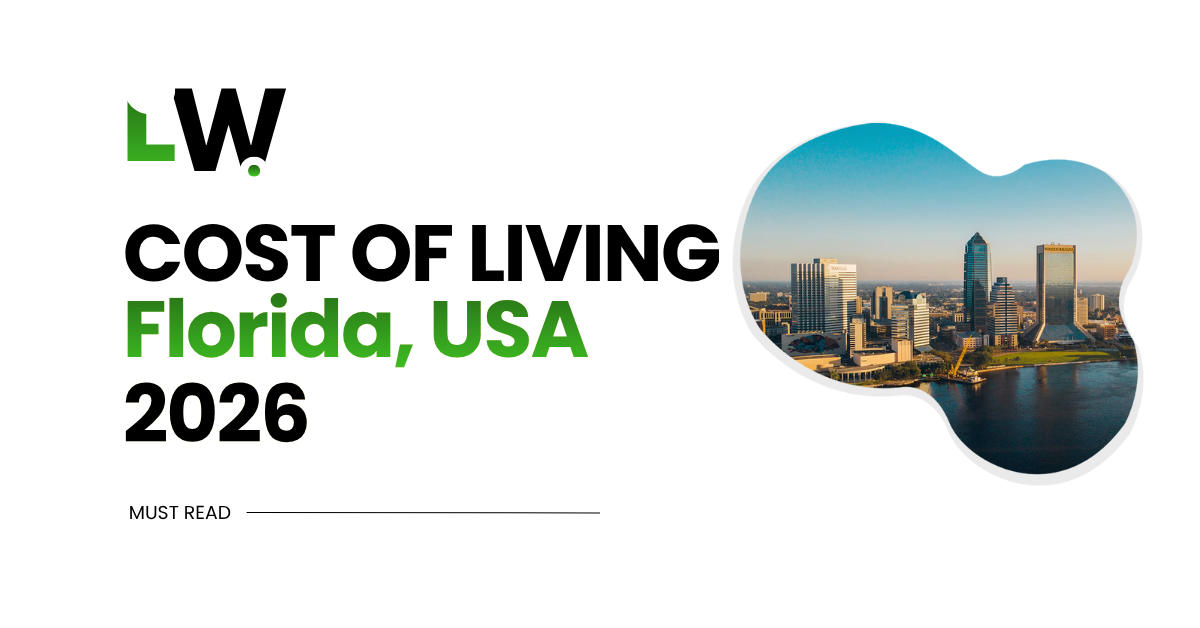
Let’s search for the cost of living in Florida. Today we are going to discuss and understand what the cost of living is in Florida and how much it costs to live there.
There has always been a special attraction to Florida. For many years, the Sunshine State offered an inexpensive way to get away from the high prices of the Northeast and the Midwest because of its weather, beaches, and lack of a state income tax. This is where retirees established their lives. Young professionals moved in search of new opportunities. Families arrived for the warmth and spaciousness. People search
However, the tale of Florida in 2026 is more complex than it was in the past.
Florida was more severely affected than nearly any other state by the pandemic migratory surge. Insurance rates skyrocketed, prices skyrocketed, and certain coastal metro areas went from being “affordable alternatives” to very pricey places to live. The state has been improving at the same time; many interior cities are still surprisingly inexpensive, and insurance reforms are bringing about real rate reductions for the first time in years.
The truthful response to the question, “Is Florida affordable?” largely depends on where you reside in the state. Jacksonville and Miami have distinct financial realities. On paper, Boca Raton and Tallahassee hardly seem alike.
This guide cuts through the noise and gives you real numbers for 2026 — housing, utilities, groceries, transportation, healthcare, and everything in between.
Florida’s overall cost of living is around 2% more than the national average, but you wouldn’t know it from the pricing in South Florida, where expenses are far higher than that statistic indicates.
| Category | Florida vs. National Average |
| Housing | ~4% higher |
| Food & Groceries | ~5–7% higher |
| Healthcare | ~2–4% lower |
| Utilities | ~2% lower (statewide avg) |
| Entertainment | ~11% lower |
| Clothing | ~11% lower |
| Transportation | Slightly higher, varies by city |
The benefit of having no income tax is genuine and significant. Compared to citizens of places like California, New York, or Illinois, where state income taxes can range from 5 to 13%, residents of Florida keep a larger portion of each paycheck. This differential alone can counterbalance rising housing costs, particularly for higher earnings.
The typical household income in Florida is around $72,200, which is sufficient to live comfortably throughout the majority of the state. However, in Miami, Naples, and seaside neighborhoods, it becomes difficult to make ends meet.
Housing is the conversation in Florida right now, and it’s split in two directions: prices have risen sharply in coastal metros, while inland cities and North Florida remain genuinely affordable.
| Unit Type | Statewide Average Monthly Rent |
| Studio Apartment | ~$1,480 |
| One-Bedroom Apartment | $1,291 – $1,506 |
| Two-Bedroom Apartment | $1,700 – $1,900 |
| Three-Bedroom Home | $1,933+ |
The “statewide average” conceals a great deal of variety. A one-bedroom condo in Miami costs about $2,720 a month. The similar unit may cost between $1,000 and $1,200 in Jacksonville or Tallahassee. Rents in Ocala, one of the most reasonably priced cities in Florida, are less than $1,000.
| City | Avg. 1-Bedroom Rent |
| Miami | $2,700 – $2,800 |
| Fort Lauderdale | $2,000 – $2,300 |
| Tampa | $1,500 – $1,900 |
| Orlando | $1,400 – $1,700 |
| Jacksonville | $1,100 – $1,400 |
| Tallahassee | $1,000 – $1,200 |
| Ocala | $900 – $1,100 |
If you have flexibility on location, the difference between renting in Miami and renting in Jacksonville can amount to $15,000–$20,000 per year. That’s not a small number.
Florida’s typical statewide house price in 2026 is between $382,000 and $386,000, which is somewhat more than the national average. Again, though, there are significant variations across cities. While decent three-bedroom houses in areas like Ocala, Pensacola, or Lakeland may still be available in the $250,000–$320,000 range, homes in Miami and coastal regions sometimes cost more than $600,000–$700,000.
Most newcomers to Florida are surprised by this hidden expense, so it’s important to be aware of it before making a purchase.
In the past, homeowners insurance in Florida has been the most costly in the nation. Over the past several years, hurricane risk, lawsuit abuse, and a contracting private market have driven rates to unbearable levels; in certain areas in South Florida, yearly premiums of $5,000 to $8,000 were common.
The good news: things are genuinely improving in 2026.
In January 2026, Governor DeSantis said that the average rate decrease for Citizens Property Insurance subscribers will be 8.7% throughout the state, with reductions as high as 13.9% and 14.1% in South Florida counties like Miami-Dade and Broward. Over the past 18 months, at least 17 new insurance firms have joined the Florida market, and private insurers, including State Farm, have applied for discounts averaging 10%.
Beginning in the spring of 2026, the rate reductions take effect upon policy renewal. This is the biggest improvement in Florida’s insurance market in recent memory, and it is truly a relief.
Nevertheless, Florida still has more expensive homeowners insurance than the majority of states. Budget between $2,500 and $5,000 annually for a $400,000 house, depending on the property’s age, location, and wind zone. If your lender requires it, flood insurance is an added expense. Another Florida-specific characteristic that new owners occasionally ignore is hurricane deductibles, which are normally 2–5% of dwelling coverage.
Florida is hot. That’s the central utility planning fact. Summer air conditioning runs hard from May through October, and electricity bills spike accordingly.
| Utility | Monthly Cost |
| Electricity (average) | $200 – $245 |
| Electricity (summer peak) | $280 – $450+ |
| Water and Sewer | $50 – $90 |
| Internet | Under $50 in most areas |
| Garbage/Waste | Included in many municipalities |
The average monthly utility bill for a typical home in the state is between $350 and $450. Due to competitive energy markets and the absence of home heating expenses, which are a significant expense in northern states, Florida actually has somewhat lower utility prices overall than the national average.
Even after accounting for Florida’s summertime air conditioning needs, you’ll probably save money on annual power bills if you’re relocating from an area with severe winters.
Florida is reliant on cars, just like the majority of Sun Belt cities. Larger cities have public transportation, such as Miami’s Metrorail and Metromover system, Orlando’s SunRail, and Tampa’s HART buses, but for the majority of Floridians, owning a personal automobile is more of a need than an option.
| Item | Monthly Cost |
| Gasoline | $120 – $160 |
| Car Insurance | $175 – $280 |
| Vehicle Maintenance | $60 – $100 |
| Tolls | $30 – $80 |
| Total (estimated) | $385 – $620/month |
Particular attention should be paid to Florida auto insurance. Due to its high accident rate, no-fault insurance laws, and litigation history, the state often ranks among the most costly in the nation for vehicle coverage. But like homeowners insurance, vehicle prices are declining in 2026. State Farm filed for an average 10.1% reduction, USAA submitted for a 7% reduction, and AAA has lowered rates by a total of 15% in recent files.
Over time, these reductions result in significant savings for the approximately $9,100 in yearly transportation expenses that a single adult in Florida normally bears.
When available, public transportation passes cost between $50 and $120 a month. Going car-free is more achievable in Miami’s urban center than in most Florida cities. Plan to drive wherever else.
Florida grocery prices run about 5–7% above the national average. The cost of transporting food to a peninsula-shaped state, combined with population growth and general food inflation, has pushed prices steadily upward.
| Item | Average Price |
| Gallon of Milk | $4.50 – $4.80 |
| Dozen Eggs | $4.40 – $4.75 |
| Loaf of Bread | $3.50 – $4.25 |
| Pound of Ground Beef | $5.50 – $6.50 |
| Bunch of Bananas | $0.75 – $0.90 |
| Household | Estimated Monthly Cost |
| Single Adult | $300 – $430 |
| Couple | $600 – $850 |
| Family of Four | $900 – $1,391 |
One bright spot is that local fish and shellfish are frequently less expensive than in landlocked areas because to Florida’s fresh seafood economy. If you buy at the farmers markets, seasonal highlights like citrus, tropical fruits, and local food can help you save money on groceries.
The cost of eating out varies greatly. In Jacksonville or Tallahassee, a casual dinner at a neighborhood restaurant can cost between $15 and $18. In Brickell or South Beach, the same event might easily cost between $35 and $50 per person. The cost of eating and dining is noticeably higher in tourist-heavy locations like Orlando, which is close to the amusement parks.
A true bright light in the expense picture is Florida’s healthcare costs, which are around 2-4% lower than the national average. Prescription drugs, dental treatment, and doctor appointments are all somewhat less expensive than in many other states.
| Service | Average Cost |
| Doctor Visit | $100 – $130 |
| Dental Checkup | $105 – $125 |
| Prescription (generic) | $18 – $25 |
| Monthly Health Insurance (employer-sponsored) | ~$140 |
| Monthly Health Insurance (Silver plan, marketplace) | ~$621 |
| Annual healthcare per person | ~$8,996 |
Florida has a sizable and sophisticated healthcare system, especially in Tampa, Orlando, and South Florida. Florida is a great healthcare bargain for seniors, who make up a sizable section of the state’s population, due to Medicare, reduced out-of-pocket expenses, and easy access to top-notch medical facilities.
Florida truly excels in this particular area. Florida’s entertainment and leisure expenses are around 11% lower than the national average, and a lot of the things that make life here fun are either free or reasonably priced.
There are hundreds of beaches in Florida, and most of them are free to visit (you pay for parking, not admittance). Vehicle fees for state parks are a few bucks. In a way that is just not feasible in the majority of the nation, outdoor eating, boating, fishing, and weekend beach excursions are all part of daily life.
The exception is theme parks. Depending on the day and park, a single-day ticket to Disney World costs between $119 and $189. The cost of Universal is comparable. It’s a good investment for families that come periodically, but yearly passes or well-planned visits are a better option for residents.
The average monthly budget for entertainment, eating out, and hobbies in Florida is between $250 and $450, which is often more than what would be spent in a coastal metropolis like New York, Los Angeles, or Chicago.
Here’s a realistic monthly budget for a single professional renting a one-bedroom apartment in a mid-tier Florida city like Orlando or Tampa:
| Expense Category | Estimated Monthly Cost |
| Rent (1-BR apartment) | $1,400 – $1,700 |
| Utilities | $300 – $420 |
| Groceries | $350 – $430 |
| Transportation | $390 – $580 |
| Healthcare | $200 – $380 |
| Phone | $55 – $75 |
| Entertainment & Dining Out | $250 – $450 |
| Total Estimate | $2,945 – $4,035/month |
For Miami, add roughly $700–$1,200 to that monthly total. For Jacksonville or Tallahassee, subtract $300–$500.
The 50/30/20 rule — 50% on needs, 30% on wants, 20% on savings — is a reasonable framework. Applying it to Florida’s real 2026 costs:
Many locals live well below these numbers, especially those who live in inland areas, share homes, or drive a single vehicle. Regardless of income level, people keep more money in their pockets because to the no-income-tax benefit. In Florida, a salary of $70,000 is significantly more than it would be in a state with a state income tax of 6–9%.
Florida’s geographic diversity makes city selection one of the most important financial decisions you’ll make:
| City | Cost vs. National Average | Best For |
| Miami | ~21% higher | Finance, international business, luxury lifestyle |
| Fort Lauderdale | ~15% higher | Beach access, professionals |
| Tampa | ~3–5% lower | Families, mid-career professionals |
| Orlando | ~4% lower | Theme park industry, tech, healthcare |
| Jacksonville | ~8–10% lower | Affordability, military, logistics |
| Tallahassee | ~10–12% lower | Students, state government workers |
| Ocala | ~12% lower | Retirees, rural lifestyle |
| Pensacola | ~9% lower | Military families, beach lifestyle at lower cost |
Jacksonville routinely stands out as one of the most reasonably priced large cities in Florida and possibly the whole Southeast, providing beaches, urban amenities, and good access to the job market at costs that seem like they belong in a different state than Miami.
| State/City | How It Compares to Florida |
| California | Significantly more expensive + state income tax |
| New York | Much more expensive + high state income tax |
| Illinois (Chicago) | More expensive overall; high property taxes |
| Texas | Comparable, Texas also has no income tax |
| Georgia | Slightly less expensive, especially Atlanta suburbs |
| North Carolina | Slightly cheaper with lower insurance costs |
| Arizona | Similar range to mid-tier Florida cities |
Florida’s strongest financial case is against California, New York, New Jersey, and Illinois. People relocating from those states typically experience a noticeable improvement in purchasing power even when Florida’s housing and insurance costs are factored in. The no-income-tax advantage is the single biggest structural financial benefit of Florida residency.
No state income tax. This is the headline benefit and it’s real. Whether you’re working, retired, or drawing investment income, Florida doesn’t take a cut. For a household earning $100,000, living in Florida versus a high-tax state can mean $5,000–$9,000 more in take-home pay annually.
Year-round warm weather. No heating bills. No winter clothing budgets. No seasonal maintenance. For many people, this translates to meaningful cost savings beyond just comfort.
Free beaches and outdoor recreation. Florida has over 1,300 miles of coastline and hundreds of state parks. Everyday lifestyle quality — beach walks, fishing, outdoor dining, weekend trips — is available without spending much at all.
Healthcare value. Costs run below the national average, and the state has an extensive medical infrastructure. For retirees especially, Florida delivers strong healthcare access at reasonable prices.
Diverse job market. Tourism, healthcare, technology, finance, logistics, aerospace, and real estate all offer employment across the state. The Orlando and Tampa metro areas in particular have been growing their tech sectors meaningfully.
Insurance improvements. After years of rising premiums, 2026 brings real rate relief. The insurance market is stabilizing, competition is returning, and policyholders are seeing reductions in both homeowners and auto insurance.
Hurricane risk is real. Living in Florida means accepting that tropical storms and hurricanes are part of life. If you buy property — especially on the coast — this affects insurance costs, home maintenance decisions, and the occasional evacuation. It’s manageable, but it’s not something to minimize.
Summer heat and humidity. Florida summers are brutal in a different way from Phoenix — not just hot, but intensely humid. From June through September, being outside in the middle of the day is genuinely uncomfortable. New residents often underestimate how much this affects daily life and energy bills.
Car dependency. Outside of Miami’s urban core, you need a car. Period. Public transit in most Florida cities is limited, and the sprawl of most metro areas makes walkability low. This adds fixed transportation costs to every household’s budget.
Insurance costs remain elevated. Yes, rates are coming down in 2026 — but homeowners insurance in Florida is still among the most expensive in the country. Flood insurance, windstorm coverage, and hurricane deductibles are additional line items that buyers from other states often don’t anticipate.
Property taxes on non-homestead properties. Florida’s homestead exemption provides meaningful protection for permanent residents, but investment properties, vacation homes, and new purchases before exemption kicks in can carry substantial tax bills.
Tourist congestion. Florida draws over 100 million visitors per year. In tourist-heavy areas — Orlando, South Beach, the Gulf Coast — this drives up restaurant prices, traffic, and parking costs, especially during peak seasons.
In 2026, Florida is a study in contrasts. It’s one of the rare places where a person may relocate to save $10,000 annually or, depending almost solely on the zip code they select, find that the expenses are startlingly more than anticipated.
Florida still makes a strong financial argument if you approach it with an open mind and a reasonable budget. In towns like Tampa, Jacksonville, and Orlando, there is no income tax, cheaper healthcare, free beaches, and a truly fantastic quality of life that doesn’t demand a high wage.
Before making a purchase, do your research on insurance. For summer utilities, make an honest budget. Consider your reliance on a car and the expenses of mobility, which mount up more quickly than most people realize. Additionally, look up Jacksonville first if someone tells you that Florida is reasonable while quoting you a rent amount from Miami.
You only need to pick your area carefully. The Sunshine State still delivers.