 111
111 2
2 3
3 4
4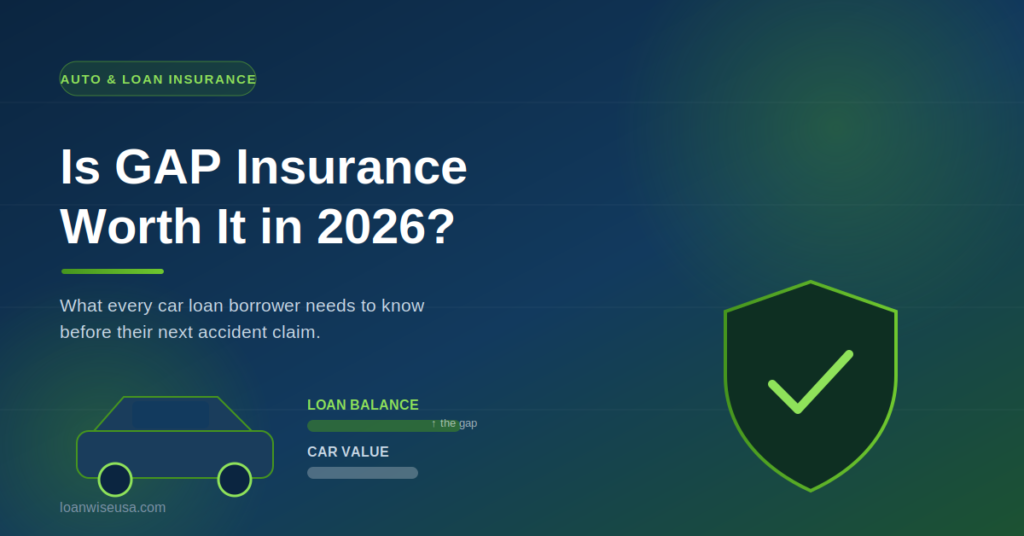 5
5
If you financed your car with a small down payment, there’s a gap you probably haven’t thought about — and it could cost you thousands of dollars if your car is totaled or stolen. That gap is exactly what GAP insurance is designed to cover, and understanding it before you sign your next auto loan can save you from a painful financial surprise.
GAP stands for Guaranteed Asset Protection. It’s a type of coverage that pays the difference between what your car is worth and what you still owe on your loan if the vehicle is declared a total loss.
Here’s why that gap exists in the first place. New cars lose value fast — often 20% or more in the first year alone. Your regular auto insurance only pays out the car’s actual cash value at the time of the accident, not what you originally paid or what you still owe the lender. If your loan balance is higher than the car’s depreciated value, you’re left paying out of pocket for a car you no longer have.
Say you buy a car for $30,000 with a small down payment. A year later, it’s totaled in an accident. Your insurance company determines the car is now worth $24,000, so that’s what they pay out. But you still owe $27,000 on your loan. Without GAP insurance, you’d owe $3,000 out of pocket on a car sitting in a junkyard. With GAP insurance, that $3,000 difference is covered.
GAP insurance isn’t necessary for everyone. It tends to make the most sense if:
If you put down a large down payment, chose a short loan term, or are financing a vehicle known for holding its value well, you may already have enough equity to skip GAP coverage.
Cost varies depending on where you buy it:
Buying GAP insurance through your existing auto insurer is almost always the better deal. Dealerships mark up GAP coverage significantly because they bundle it into financing paperwork, and that markup can quietly add hundreds of dollars to your total loan cost.
Regular collision or comprehensive insurance pays out based on the car’s actual cash value — never the loan balance. GAP insurance sits on top of that payout and fills the difference. Neither policy replaces the other; GAP insurance only works alongside your existing collision or comprehensive coverage, not by itself.
As you pay down your loan, the “gap” between what you owe and what the car is worth shrinks. Most financial advisors suggest reevaluating whether you still need GAP coverage once your loan balance drops below the car’s current market value — often somewhere around the two- to three-year mark, depending on your loan terms. At that point, keeping the coverage may just mean paying for protection you no longer need.
For most people financing a car with little money down, GAP insurance is a low-cost way to avoid a high-cost problem. A $20-a-year add-on that protects you from a $3,000 to $5,000 out-of-pocket bill is generally a smart trade-off, especially in the first two to three years of a loan when your risk is highest.
If you’re putting a significant amount down, financing a vehicle that holds its value, or paying off your loan quickly, you may be able to skip it and put that money elsewhere.
Is GAP insurance required by law?
No. GAP insurance isn’t legally required, but some lenders and most leasing companies require it as a condition of financing.
Can I cancel GAP insurance after buying it?
Yes, in most cases. If you bought it through a dealership and financed it into your loan, you can typically request a refund for the unused portion once you cancel.
Does GAP insurance cover a stolen car?
Yes, GAP insurance applies whether the vehicle is totaled in an accident or declared a total loss due to theft, as long as your comprehensive coverage is active.
Do I need GAP insurance if I lease a car?
Most leasing companies require GAP coverage as part of the lease agreement, and it’s often already built into your monthly payment.