 111
111 2
2 3
3 4
4 5
5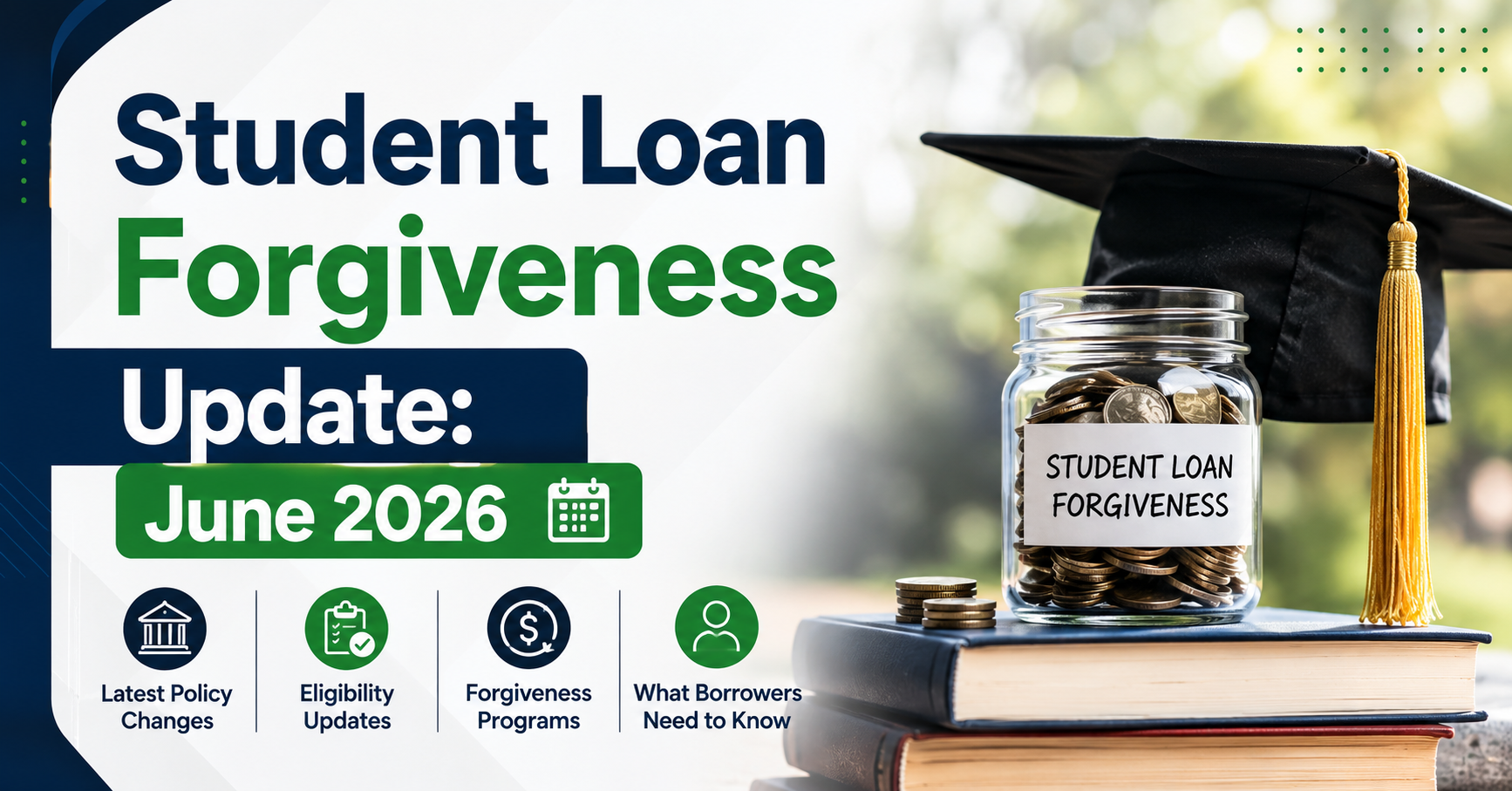
If you’ve been trying to follow student loan news over the past year, you’re not alone in feeling confused. The headlines have been all over the place — “forgiveness is dead,” “SAVE plan ended,” “new law changes everything.” Some of it is accurate. A lot of it is missing important context.
Here’s the straight version: student loan forgiveness is not gone in 2026. The programs that matter most — Public Service Loan Forgiveness, Income-Based Repayment forgiveness, disability discharge — are still open and still processing applications. What ended was a specific Biden-era plan called SAVE, and a broader effort at one-time mass cancellation that courts blocked.
But there are also major changes happening right now — some with deadlines in the next two weeks — that could directly affect your payments, your forgiveness timeline, and your options going forward. This article covers all of it.
Everything starts here. Starting July 1, 2026, federal student loans will undergo some of the most sweeping changes in decades, thanks to the One Big Beautiful Bill Act (OBBBA), signed into law in July 2025.
This law didn’t eliminate forgiveness. What it did was restructure the entire repayment system — ending several income-driven repayment plans, creating a new one, and setting hard deadlines that some borrowers need to act on immediately.
Here’s what changed at the top level:
The One Big Beautiful Bill Act eliminates SAVE, PAYE, and ICR for new enrollments and phases all three out entirely by July 1, 2028. Income-Based Repayment stays available to borrowers with loans disbursed before July 1, 2026.
For new loans disbursed after July 1, 2026, the bill eliminates current income-driven repayment plans and replaces them with two repayment choices: the Repayment Assistance Plan (RAP), a new income-driven plan, and a Tiered Standard Plan with fixed payments over 10–25 years depending on loan balance.
The SAVE plan was the Biden administration’s flagship repayment program — lower monthly payments, faster forgiveness timelines, and no interest accumulation if your payment didn’t cover the month’s interest. Millions of borrowers enrolled.
The One Big Beautiful Bill Act legally terminated the SAVE Plan as of July 1, 2028 — but the Department of Education announced a proposed settlement agreement that would end SAVE far sooner, moving all 7+ million SAVE borrowers into available repayment plans well before that statutory date.
There continues to be a backlog of repayment plan applications that servicers have not yet processed, with some borrowers waiting more than six months for resolution.
If you’re currently in SAVE, here’s what that means practically: your plan is being wound down. You need to actively choose a replacement — don’t wait to be automatically moved, because borrowers who fail to select a new plan may be automatically placed into a Standard repayment option, which for most people means significantly higher monthly payments.
What is a AAA Auto Loan?Benefits of Choosing a AAA Auto Loan1. Competitive Interest Rates2….
What Is an FHA Loan?Key FHA Loan QualificationsWhy Consider an FHA Loan?Final Thoughts Welcome to…
What Is GAP Insurance?A Simple ExampleWho Actually Needs GAP InsuranceHow Much Does GAP Insurance Cost?GAP…
The Repayment Assistance Plan (RAP) is the newest income-driven repayment plan for federal student loans, created by the One Big Beautiful Bill Act. RAP is expected to be available to eligible student loan borrowers starting July 1, 2026. For borrowers who take out student loans on or after July 1, 2026, RAP will be the only available IDR plan.
RAP is income-driven, meaning your monthly payment is still tied to what you earn. But there are important differences from the old plans:
Unlike the existing IDR plans, even the lowest-income student loan borrowers must make a minimum payment of at least $10 a month under RAP, regardless of income.
The RAP extends the maximum repayment term to 30 years, and many borrowers will have a higher monthly payment under RAP than they would have under the current IDR plans.
One upside: RAP borrowers will not be locked into a 30-year plan — they can switch to a standard plan, which ranges from 10 to 25 years.
The bottom line on RAP: it’s not as generous as SAVE was, but it’s better than being defaulted into the standard plan if your income doesn’t comfortably support those fixed payments.
If you’ve read that student loan forgiveness is dead in 2026, here’s the most important thing to know: it isn’t. Public Service Loan Forgiveness is actively processing applications. Income-Based Repayment forgiveness is available. Borrower defense claims are being reviewed and paid. Disability discharge is moving through the system. The rules changed. The programs remain.
Here’s a breakdown of each:
PSLF forgives the remaining balance on federal student loans after 10 years of payments while working full-time for a qualifying government or nonprofit employer. It remains active and is processing applications in 2026.
One timing note for IBR forgiveness: the Department of Education has temporarily paused processing of IBR forgiveness discharges while it recalculates payment counts, with no announced resumption date. Enrollment and payment counting continue — the pause affects when final discharges go out, not your ability to keep earning credit.
In other words, your payments are still counting toward forgiveness. You just may wait longer for the actual discharge to process.
If your original loan balance was $12,000 or less, your remaining balance is forgiven after 10 years of payments. If your original balance exceeded $12,000, forgiveness occurs after 20 years for undergraduate loans or 25 years for graduate loans.
IBR remains available to borrowers with loans disbursed before July 1, 2026. It’s currently one of the most legally stable routes to forgiveness given all the changes happening around it.
If your school misled you, made false promises about job placement, or violated state consumer protection laws, you may have a borrower defense claim. These are still being reviewed and paid out in 2026, though processing times are slow.
Borrowers who become totally and permanently disabled can have their federal loans discharged. The One Big Beautiful Bill extended the tax break that exempts student loans discharged through total and permanent disability discharge from federal income taxes — providing relief from an unexpected tax bill for borrowers who become disabled.
This is the most time-sensitive piece of information in this entire article.
Parent PLUS borrowers who have not applied for PSLF but are eligible must consolidate into a Direct Consolidation Loan and enroll in an IBR plan before June 30, 2026. Parent PLUS borrowers are advised to consolidate as soon as possible to ensure they meet the deadline.
After July 1, 2026, parent borrowers will no longer be able to enroll in an existing IDR plan, and they won’t be eligible for the new RAP. Parents who wish to use income-driven repayment or PSLF must consolidate their loans by June 30, 2026 to remain eligible.
If you’re a parent with PLUS loans and you want any shot at income-driven repayment or PSLF, you have days — not months — to act. Go to StudentAid.gov right now, start the consolidation process, and apply for IBR immediately after.
This one flew under the radar for a lot of people.
Although the American Rescue Plan Act excluded most federal student loan forgiveness from taxable income, it was applicable only for loan forgiveness processed between December 31, 2021 and December 31, 2025. If your federal student loan balance is forgiven under an income-driven repayment plan in 2026 or later, the amount forgiven is generally treated as taxable income — known as cancellation of debt income. You may receive a Form 1099-C and must report the forgiven amount on your tax return for the year in which the debt was canceled.
For some borrowers, large loan forgiveness can create large tax liabilities. Forgiven student loan debt is generally taxed at ordinary income tax rates, which can lead to a significant tax bill and push you into a higher tax bracket. If you’re expecting loan forgiveness in 2026 and beyond, consider advance planning — increase withholdings, make estimated payments, or set aside savings.
Important exception: you don’t have to pay federal taxes on loan cancellation from Public Service Loan Forgiveness. The tax issue primarily affects IDR forgiveness after long repayment periods.
The OBBBA didn’t just change repayment — it also changed how much students and parents can borrow going forward.
Effective July 1, 2026, Parent PLUS loans will have new limits of $20,000 per year, with a lifetime limit of $65,000 per student.
New federal student loans will no longer be eligible for economic hardship or unemployment deferments — which let borrowers pause payments when they couldn’t afford them. This applies to loans issued on or after July 1, 2027.
For families planning to borrow for college in the next few years, this significantly changes the financial planning calculation. The safety net that federal loans once offered — the ability to pause payments during hard times — is being removed for new borrowers.
If you’re currently in the SAVE plan:
You need to pick a new repayment plan before you’re automatically moved to Standard. Log in to StudentAid.gov and evaluate whether IBR or RAP fits your income better. Don’t let this happen to you passively.
If you’re a Parent PLUS borrower pursuing PSLF or IDR:
June 30, 2026 is your deadline — days away. Consolidate immediately at StudentAid.gov and apply for IBR right after. This window does not extend.
If you’re on IBR and working toward PSLF:
Keep making payments. Your qualifying payments are still counting even while the Department of Education works through its processing backlog. Use the official PSLF Help Tool to verify your employer is still certified.
If you expect loan forgiveness in 2026 or later:
Start planning for the tax bill now. Talk to a tax professional and consider setting aside 20–30% of the expected forgiven amount. The tax exemption that protected IDR forgiveness through 2025 is gone.
If you’re a new borrower starting college in fall 2026:
Your loan options are different from what they were a year ago. You’ll have the RAP and Standard plan as your repayment options. Build a realistic budget based on RAP payments — don’t assume the same safety nets exist that borrowers from 2020 or 2021 had.
Student loan forgiveness in June 2026 is not dead. PSLF is working. IBR forgiveness is counting your payments. Disability discharge and borrower defense are processing. The one-time mass cancellation Biden attempted is gone, and SAVE is being wound down — but those were always separate from the core forgiveness programs that millions of borrowers have been building toward for years.
What has changed is the structure around repayment, borrowing limits, and tax treatment. Those changes are real, and some of them require action in the next few days — especially if you’re a Parent PLUS borrower.
The advice here is simple: log in to StudentAid.gov, verify which plan you’re on, check your PSLF qualifying payment count if applicable, and make a decision about RAP before July 1 if you’re currently in SAVE. The program that can help you most is probably still available. But you have to actively stay on top of it.
Disclaimer: This article is for informational purposes only and does not constitute financial or legal advice. Student loan rules are subject to change. For guidance specific to your situation, contact your loan servicer or a certified student loan counselor at StudentAid.gov.